
2025 Warren Buffett portfolio Shift :The Shift from Traditional to Premium Financial Services
Hello, this is JEJE Finance. In today’s article, we’ll analyze Warren Buffett portfolio shift in the financial sector, particularly his significant divestment of traditional bank stocks while maintaining his position in premium financial services.
Warren Buffett Portfolio Shift: Divesting Bank Stocks while Retaining Premium Financial Services
Understanding Buffett’s Banking Sector Retreat
Warren Buffett, the legendary investor and CEO of Berkshire Hathaway, has been accelerating his withdrawal from banking stocks since early 2023. This strategic portfolio shift has caught the attention of investors worldwide, as Buffett’s moves often signal broader market trends.
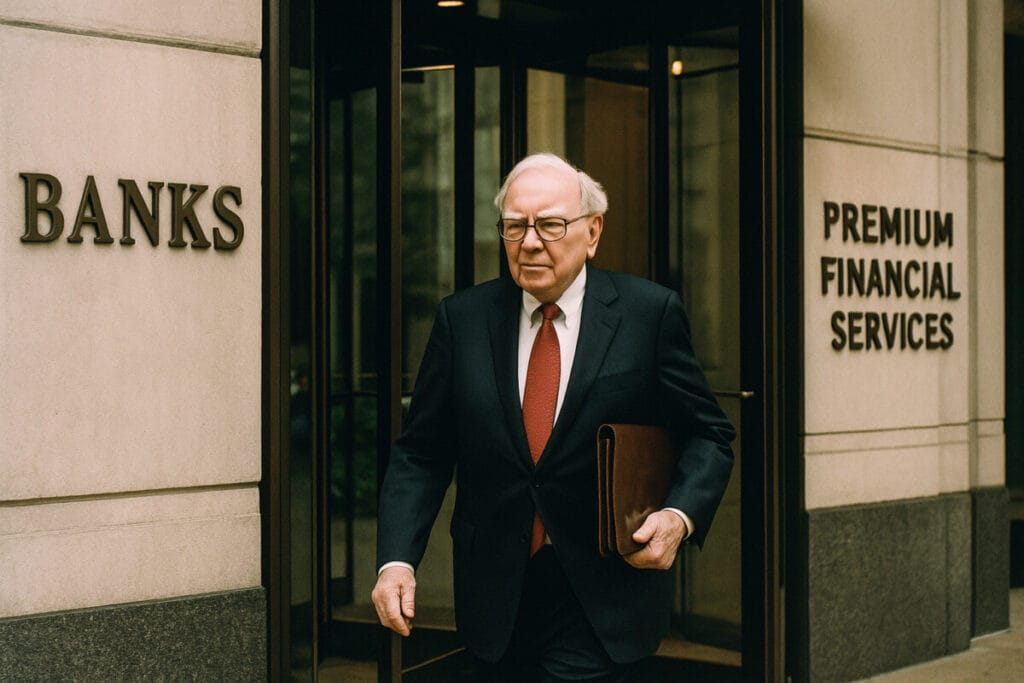
Citigroup saw the most dramatic reduction, with Buffett selling off approximately 73% of his holdings. Bank of America, once considered one of his favorite investments, wasn’t spared either – he reduced his position by an additional 14.7%, bringing the total reduction to 23.7% over just two quarters. Other financial institutions facing Buffett’s selling pressure included Capital One (reduced by 7%), Nubank Holdings (down 19%), and Charter Communications (cut by 26%).
These moves represent a substantial strategic portfolio shift for Berkshire Hathaway, raising questions about Buffett’s outlook on traditional banking in the current economic climate.
Factors Driving Warren Buffett Portfolio Shift
Several key factors appear to be driving Buffett’s strategic portfolio shift away from traditional banking stocks:
1. Persistent High Interest Rates: The extended period of elevated interest rates has created challenging operating conditions for traditional banks. While higher rates typically benefit banks’ net interest margins, they can also increase funding costs and dampen loan demand. Buffett may anticipate continued pressure on traditional banking profitability in this environment.
2. Regulatory Uncertainties: The banking sector faces ongoing regulatory scrutiny, particularly following recent bank failures that have prompted calls for stricter oversight. These potential regulatory changes create uncertainty around future profitability and operating models for traditional banks.
3. Technological Disruption: Traditional banks continue to face significant competitive pressure from fintech companies and digital banking alternatives. These new entrants often operate with lower cost structures and offer more innovative customer experiences.
4. Economic Outlook Concerns: Buffett’s moves might indicate concerns about the broader economic outlook, including potential recession risks that could lead to increased loan defaults and deteriorating asset quality for traditional banks.
5. Valuation Considerations: After a period of stock price appreciation for many banking stocks, Buffett may simply be taking profits in sectors he believes have reached fair value.
The American Express Exception: A Strategic Retention
Perhaps the most telling aspect of Buffett’s strategic portfolio shift is what he didn’t sell. Despite his substantial divestment from traditional banking stocks, Buffett maintained his entire position in American Express. This strategic retention speaks volumes about his differentiated view of the financial services landscape.
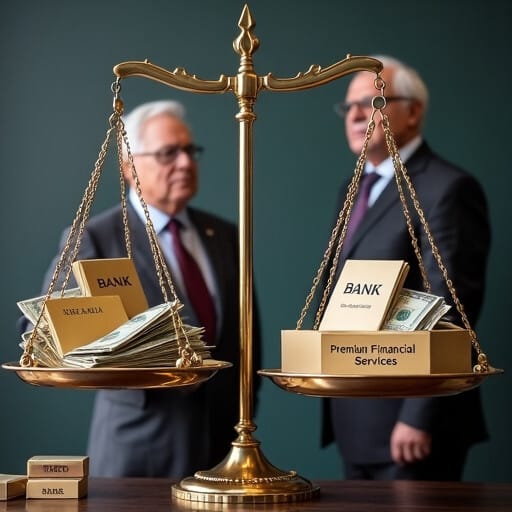
American Express stands apart from traditional banks in several key ways:
1. Premium Brand Position: American Express maintains a prestigious brand identity that commands premium pricing and attracts affluent customers.
2. Closed-Loop Network Advantage: Unlike most payment processors, American Express operates a closed-loop network where it serves as both the card issuer and payment processor, allowing for higher fee revenue and better data collection.
3. Fee-Based Revenue Model: American Express relies heavily on annual fees and merchant fees rather than traditional lending, making it less vulnerable to interest rate fluctuations and credit cycles.
4. Wealthy Customer Base: The company caters primarily to higher-income consumers and businesses, who tend to be more resilient during economic downturns.
5. Strong Travel and Entertainment Focus: As business and luxury travel rebounds post-pandemic, American Express stands to benefit from increased spending in these categories.
By maintaining his American Express stake while divesting from traditional banks, Buffett appears to be signaling a preference for premium financial services businesses with strong brand equity, fee-based revenue models, and affluent customer bases over traditional deposit-taking and lending institutions.
Strategic Implications for Investors: Beyond Simple Banking Divestment
Buffett’s actions represent more than simply selling bank stocks – they reflect a sophisticated strategic portfolio shift within the financial services sector. This nuanced approach offers several key insights for investors:
1. Quality Differentiation: Buffett appears to be distinguishing between different business models within financial services, favoring those with premium positioning and less interest rate sensitivity.
2. Long-term Vision: While reducing exposure to traditional banks facing near-term headwinds, he’s maintaining investments in financial companies with sustainable competitive advantages.
3. Selective Opportunity: Rather than making a blanket judgment on all financial services, Buffett is making careful distinctions between various business models and their future prospects.
4. Fortress Balance Sheets: American Express maintains exceptional financial strength, suggesting Buffett continues to prioritize financial stability in his holdings.
5. Customer Relationship Value: The retention of American Express highlights the importance of companies with strong, direct customer relationships that generate recurring revenue.
The Broader Market Implications
Warren Buffett Portfolio shift has broader implications for financial markets. When an investor of his stature makes significant moves, others often follow suit or at least reconsider their own positioning.

Warren Buffett Portfolio shift suggests potential concerns about traditional banking models in an environment of technological disruption, regulatory pressure, and changing consumer preferences. It also indicates a preference for financial services businesses that operate with proprietary networks, strong brands, and recurring revenue models.
For bank investors, this serves as a reminder to evaluate each institution on its specific business model strengths rather than viewing the sector monolithically. Banks with higher-quality loan portfolios, stronger fee income, and technological advantages may be better positioned than peers primarily focused on traditional lending.
Conclusion: Strategic Repositioning Rather Than Sector Abandonment
Warren Buffett’s recent moves represent a strategic repositioning within financial services rather than an abandonment of the sector altogether. By reducing exposure to traditional banking while maintaining his position in premium financial services like American Express, Buffett demonstrates a nuanced view of the industry’s future.
Warren Buffett Portfolio shift highlights the importance of distinguishing between different business models even within the same broad sector. It suggests that while traditional banking may face headwinds from interest rate volatility, regulatory pressure, and technological disruption, premium financial services companies with strong brands, affluent customer bases, and fee-based revenue models may continue to thrive.
For investors, the lesson is clear: even within a challenging sector, opportunities exist for companies with differentiated business models and sustainable competitive advantages. Buffett’s moves remind us that successful investing isn’t about making broad sector bets but rather identifying specific businesses with the qualities to succeed in changing environments.
At JEJE Finance, we’ll continue monitoring Warren Buffett Portfolio shift and its implications for the broader financial sector. Stay tuned for more insights into how these developments might affect your investment strategy.
If you want to view Warren Buffett’s (Berkshire Hathaway’s) portfolio, here are some of the best websites:
1. WhaleWisdom (whalewisdom.com)
- Provides detailed visualizations of Berkshire Hathaway’s 13F filings.
- Just search for “Berkshire Hathaway” or “Warren Buffett” to see holdings, weights, and quarterly changes.
2. GuruFocus (gurufocus.com)
- Tracks portfolios and recent trades of legendary investors, including Warren Buffett.
- Shows portfolio composition, buy/sell history, and changes over time.
I also recommend that you take a look at the following content.
Google Gemini Ultra Plan: The Ultimate AI Subscription Service Launches at $249.99 Monthly